Showing posts with label Historical. Show all posts

Tuesday, March 24, 2015

From Rubbish Art to Masterpieces

P1350834_Fotor

Stains of dirt and residues of the rainwater dripping down these once-white washed brick and lime plastered walls are evident, stripping the pre war buildings and shop houses of their former glory.
Perhaps they were once majestic in their past; concealing the untold stories as they stand in their place, bearing witnesses to the many events and even tragedies which unfold before them.
Today their dilapidated state is a sure giveaway of their age and sorry states, as they stand in the bleak part of the town, casting gloomy shadows of themselves as they are no longer at the prime of their youth nor are they the center of the limelight, but instead they are today sore to the eyesight, and no one would even take a second glance at them.
They are only known as the old buildings; thrown into the background as urbanization and modern buildings step into take their places and the only attention they are getting are from the people who call them hazards to the society and placed them on the list of demolition, paving that way for their blueprint plans of sky high buildings adorned with glass windows and ceilings in their places.

There is no escaping that fate, and they are screaming, weeping tears in silent protest of their own extinction; pained by the cruelty of their fates and also the fact that their contributions, deeds and reasons of existence have been forgotten in that blink of an eye. They are no longer important; that message was clear and the recognition of their past (or lack of) is clearly almost nonexistent.
They were nothing but just remnants of trash to be taken out to clear out the backyard; all in the name of modernization.

Their futures are bleak and they moan their distasteful eviction from the present but no one heard their cries. Their existence no longer means anything.
One man changed everything.
With a touch of his brush and creativity, he gave life again to these walls.
He saved them with his grace of painting and brought back feelings of exuberance and reformation to the town.
With just one brush.

A joint effort between the municipal of Georgetown and this budding young Lituanian artist, Ernest Zacharevic took on the bold challenge to transform the historical town, also the capital of the famous Pearl of the Orient, the Penang island located on the north of Malaysia, with just a few paintings to inject that fresh breath onto the yellowish pages of the town.
It started with six paintings; and the local council granted the artist the permission to begin his project, painting, on, get this, the old street walls.

The old dilapidated walls are the artist’s canvas for him to unleash his talent and creativity.
It is a winning situation for many parties, if you come to think of it; the town gets another identity and an overnight sensation of catapulted fame, the local authorities reap from the boost in tourism, the artist gets to showcase his talent and a chance at fame, the owners of the shophouses, well, get a fresh coat on their sorry walls, and the walls, are, now, priceless and saved from their intended evil destruction.

It was a huge success, probably more than the original plan.
Ernest Zacharevic proved to be an incredible talent with his strokes, and he had painted realistic and remarkably heartfelt depictions of the local scenes.
His paintings drew the locals and tourists from all over the nation and worldwide to throng the island in droves.
It was amazing, the way his paintings; his street art or murals, evoke emotions and memories of the local scenes which is perhaps, the very reason for drawing his audience (art or even non-art enthusiasts) to flock to each location of his art like opposite sides of the magnate.

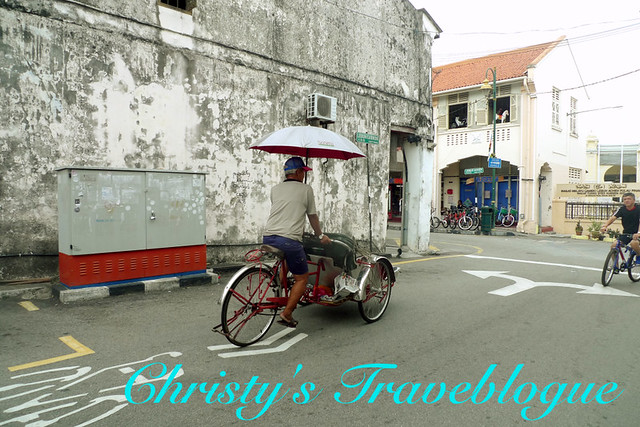
From the “Boy on a Bike” to the “Little Children on a Bicycle” and the striking “Awaiting Trishaw Pedaler”, the location of these walls became instant tourist spots and dot the traveler’s map, topping the list of the places to visit, or must visit in Penang.
P1350828_Fotor
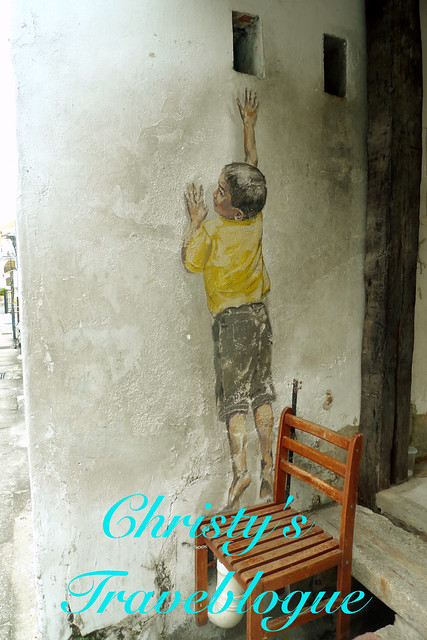
Another piece, "Reaching Up" found on one of the walls and have been featured in one of the Hong Kong drama

Already a tourist destination in its heydays due to the crowns of “Food Paradise” and heritage status (Penang is recognized and honored as a UNESCO Heritage Site since 2008), along with its longstanding tiara of being nicknamed as the Pearl of the Orient due to its many wonders (nothing could be better than that; in fact the island is almost unbeatable in its fame compared to its minute size on the map), the island continues to enjoy more attention worldwide and welcoming visitors from all over the world.
The spike in tourism delighted the locals and businesses continue to prosper, and there is no longer a difference in weekends and weekdays for there are always foreign folks on the island throughout the year.

The locals were the first to pay homage to these artistic paintings, of course, though there were also many who have not been. It is always as such, for the locals are always the comfortable in their own backyards and believe that they are always going to be there.
After all, it is their hometown, isn’t it?
Tourists are excited to stalk the spots where the wall art are located, and it became sort of an activity of treasure hunt, or rather, wall art hunt, as everyone follows the trail, preying on one mural after another.
Technology has definitely helped to spread the reputation of these street murals; with the creativity of poses and postings to social media accounts such as Facebook, Instagram, Twitter, and Pinterest.

The walls have definitely been restored to its former glory, though they have been reinstated with a new breath of identity altogether, with that coat of illustration and colors on their faces.
Well, at least, it did well to mask their fears and insecurities, and also the misery of their former selves.
The walls can now breath a sigh of relief, and continue to smile as they are now, right smack, thrown into the limelight and perhaps, they might now silently wish for a moment of silence, once in a while.

The surge in the overnight fame of the street wall art catapulted its artist, Ernest Zacharevic into stardom, as he rides on his new fame; holding his art exhibition on the island as well.
It probably also inspired many others to have a go at demonstrating their skills, transpiring the many more unknown paintings and murals to emerge on the street walls over time, and perhaps, at an alarming rate too. The growth of these murals makes it difficult for many to distinguish between the real McCoy from the decoys.
Perhaps there are many more Ernest Zacharevics out there, or they are just wannabes, trying their luck to be someone one day.
However controls are exerted, for unauthorized paintings on the public street walls constitute acts of vandalism and is a breach of public responsibility, and definitely, illegal by all means.

Once regarded as an act of vandalism; street paintings (or perhaps some form of beautified graffiti) on public street walls, are now given a new name in justice, with their contributions to the local tourism.
They are now known as Street Art/Mural.

Ernest Zacharevic has popularized street art, and given a fresh perspective to as he calls it, rubbish art, but he has definitely given them their due credit.
It is not just with a flick of brush, but it comes with talent and skill, and of course, that burst of creativity.
Let’s not forget about opportunity either, for there are so many talented people out there who remain unrecognized and perhaps underrated for they never had the opportunity.

Given the opportunity and the permission, rubbish or street art can become tourist and social media worthy of attention but remember, doing it on your own and without the right approval, it is still a crime and one is just asking for trouble.


Thanks to Ernest Zacharevic, these street art has unveiled the beauty of Penang to the world, through her very own eyes, or walls, if you may, of the simplicity and exuberance of the lives here, a secret well kept by the locals and now, proudly illustrated for the world to see.
P1350826_Fotor
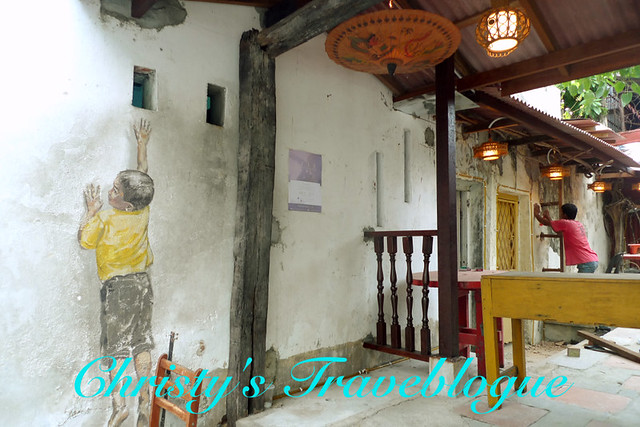
What a coincidence when I captured this photo, definitely not planned in my "accidental photo shoot"!


**Most of the street art by Ernest Zacharevic are located in the UNESCO Heritage site of Georgetown; mainly centering in the Armenian Street enclave, bordering  Weld Quay and its vicinity. **

Wednesday, April 16, 2014

Taiwan Travelogue: Tamsui (淡水) Old Street


To the north of Taipei is the little township of Danshui(local Mandarin pronunciation), or Tamsui (English name), known for the many attractions and historical past and a perfect location to boast of for the stunning views of sunset. These are just the few to name of Danshui's offerings, which did well to attract her own share of visitors as compared to the other top ranking tourist spots in the country.
Danshui 淡水 (in Mandarin) or Tamsui (translated to English term) literally means "Fresh water".
It was initially known as Hoba, in the aboriginal Ketagalan (who were the earlier settlers in this location) which means 'Stream's mouth' and was then adapted into the local Taiwanese language to be known as 'Hobe'. When the Spanish arrived in the early 17th century, they named the place Casidor and the Tamsui River Kimalon.
The development and urbanization of the town maintained its name; though today the government has emphasized that the name Tamsui is used to refer to this town in English, rather than Danshui as seen in most MRT and guides.
However, it is still not uncommon to see the two words being used interchangeably in the context of referring to this quaint little town.
(For official purposes, I will use the official term to refer to the town; Tamsui).

Formerly a prime location as a commercial shipping hub in its heydays, Tamsui was slowly replaced by Keelung in the early 20th century. While the town owes its past to the shipping activities, today it continues to flourish as a tourism hub with the picturesque scene overlooking the harbor; or the ferry pier and the fisherman wharf located downstream and reachable via a ferry ride.
The history from the colonial ages of both the Dutch and Spanish stayed on the town and is evident from the styles of the buildings and the Tamsui Old Street.


The Old Street of Danshui or Tamsui Old Street, is a long street filled with shophouses and stalls beckoning to the daily visitors to this town with their local products and merchandise.
There are many to see and do here; just like most of the streets or markets in Taipei, there are just so much food and drinks, and apparel on sale here.
Take in the lively scenes on the streets; filled mostly with tourists rather than locals (or perhaps Taiwanese on weekends).
Browse through the stalls on the side of the streets, and also some of the shops; confectioneries and eateries which offer things unique to this little town.


For instance, Iron Eggs is something to look forward to here.
Made of quail eggs or normal chicken eggs, the Iron eggs is a home-developed recipe by an old grandma, Grandma Huang, who, during the earlier days of her business, struggling in the ominous times had to
re-cook the eggs she had on sale several times to last through the days.
The result ended in the slightly harder and chewy textured, dark-colored eggs which have shrunk at least half of its original size which then became an innovation and boomed as an interesting product known as Iron Eggs today.
While this can be seen and found in many stalls along the street, the most famous and original shop is the Grandma Tiedan/Grandma Huang's Iron Eggs.


The Tamsui Fish balls are supposedly famous; fish paste balls stuffed with minced meat and garlic.


Tamsui Old Street at a glance 


There's even an outlet from the famous Naraya, all the way from Thailand!


Tamsui Old Street is truly a delightful window to the blend of history and modern living with the colonial-inspired buildings as part of the background and fronted by the hustle bustle of the jovial contemporary crowd; filled with the locals making a living amidst the eager tourists and visitors every day.
One could easily lose track of time when taking a walk down this street, it is that enjoyable~


The Old Street runs along the Tamsui River, with a pier overlooking the harbor and across to the Fisherman Wharf.
It is indeed a romantic stretch to walk down with the breeze blowing in your hair and with mesmerizing views of the waterfront


To be continued....to the next part of Tamsui...


Wednesday, March 26, 2014

Taiwan Travelogue: National Palace Museum in Taipei (国立故宫博物院)

The first day was filled with historical sites hopping; covering from one famous landmark to another as though we were in a hurry when in fact we had more than a week. Then again, this is Taiwan we are talking about and the places of attraction are just too many to be listed and even weeks will not be sufficient to complete a full tour of the country, let alone the capital Taipei.
Besides, the first day was usually when one is filled with excitement and bursting with enthusiasm and anticipation towards being in a new place away from home and that alone spells adventures and fun. We planned our routes; or rather, we did not really plan much in detail (learning from experience) and just decided to go with the flow or our moods for the day.

Having visited one of the oldest temple and a historical street in the morning to the iconic CKS memorial hall, the next stop was again to ponder at the history; or perhaps to say, the historical artifacts from the early dynasties (during the monarchy rule) in another landmark topping the recommended places to visit in most guide books; the National Palace Museum in Taipei, also known as Guoli Gugong Bowuyuan (国立故宫博物院).


Pillars, tall and white stand boldly with carvings on them joined together by the arched Oriental-styled roofs, tower over the flight of steps which paved the way towards the museum, as a way of greeting the visitors at the very first sight upon arrival.


From the white and blue marbled building of the Chiang Kai Shek Memorial Hall to this building complex of beige yellow colored bricks toned with white stairways and pillars, and topped with Imperial-styled slate roofs which housed historical collections from the early ages of civilization to the dynasties of China, dating until the reign of the last Emperor Puyi.

The National Palace Museum here in Taipei is said to originate from the Palace Museum in the Forbidden City of Beijing; or that they are almost two peas in a pod and are only separated to two different places following the results of the Chinese Civil War.
The main differences are definitely evident in the geographical location; where one is in Beijing, China while the other one is in Taipei, Taiwan where the latter was preceded by a prefix of National in the naming convention.


A typical statue of the Chinese lion guarding the door; there is always a pair of these at the main entrance where they are believed to be of male and female and are tasked to cast away evil spirits from unauthorized entrance.


With a collection dating as far back as 8,000 years from the age of Neolithic to the late Qing Dynasty and covering the trail of the Chinese history of more than 5,000 years, the museum was said to be home to more than half a million of historical and ancient Chinese artifacts (~696,000) and it is definitely one of the world's largest museum complex. There is no wonder this place tops the list of the must visit places in Taipei, and the place just attracts tourists and local visitors like bees swarming to honey; and literally, this place is filled with ancient treasures waiting to impress and sweep their visitors off the floor.
These are not the ordinary artifacts you find in your usual museums which are sometimes filled with replicas reproduced to bring back the memories from the past; the relics and items displayed here are actual pieces from those ages mentioned above, which had gone through tumultuous and challenging journeys before they finally arrived to be displayed this day.
(Read more about the process of transporting these artifacts to this museum here).

It is interesting to note that with the huge number of more than half a million, the artifacts which made it successfully to this museum still accounts for only slightly more than 20% (~22%) of the full collection which was originally packed to be shipped out for preservation at that time.
I can only imagine if the full collection were here?

There are no photography allowed inside the museum; reasonably so as we are talking about ancient artifacts here and the complex is just so huge that it is almost impossible to finish touring the grounds in a day, even if you are here early. The place is lined with a clear directory pointing visitors to the different categorized sections; from painting and calligraphy works to the antiques found from the different dynasties, historical documents from the notable figures back then including the emperors, etc. There is just so much to see and learn from this place; that it would definitely send any history enthusiasts shooting through the roof upon entering the large, well-organized and air-conditioned building.

If you are just interested to skim through; I would still say an hour or two would be required as it would do more justice to the historical artifacts on display here.
There are also guided tours with a fee for those interested, to fully enjoy and understand the collection on display in the museum.


With the white-washed stone brick walls leading to the museum, it did indeed resemble somewhat buildings pictured in the Forbidden City, and there is just this feeling that I was in Beijing when I was there.


Admission Fees: TWD$250; TWD$230 (for groups/tours)
(Do keep the ticket stubs for a free admission to the nearby Zhi San/Chih-San Garden)

Opening Hours:
08:30 - 18:30 (Sunday to Thursday)
08:30 - 21:00 (Friday and Saturday)

General Rules to Observe:
1. No Photography/Cameras allowed inside the museum
2. Bagpacks or large bags/duffel bags are to be stored in lockers provided by the museum before entering (just right beside the ticketing counter; the staff will guide you)
3. No Slippers allowed
4. The Ticket stubs for the admission to the National Palace Museum grants free admission to the nearby Zhisan/Chih-San Garden

How to Get There:
Okay, this will not be a straightforward route from the train as you will need to hop onto a bus to get to this museum.


(a picture of a small bus/van - not actual illustration of the bus to the museum)

Take the Taipei HSR or the usual train to the Main Taipei station, then to Shilin station.

Transfer to Taipei City Bus (No.30), which will take you straight to the National Museum stop.

These are also the other possible buses which can take you there:
815, 255,304,18,19,101

To be continued....

Monday, March 24, 2014

Taiwan Travelogue: Chiang Kai Shek Memorial Hall


White sparkles reflect from the marbled walls of the octagon-shaped building, which stands with a majestic and commanding presence on an elevated platform, and appears as though the building is wearing a blue-glazed tile roof with the red accent as its hat. It is unmistakably the colors of the flag of the Republic of China, adorning the hallowed stature of this building which was erected since the year 1976 in memory of an important figure in the history of Taiwan.

One should not be unfamiliar with the historical figure of Generalissimo Chiang Kai Shek (蒋介石), who had cast an eminent shadow in shaping the country (Taiwan) to her identity in the modern era of today. The first President of the Republic of China and a prominent or influential member of the Kuomintang (KMT), Chiang has indeed left many imprints in the history of both China and Taiwan till this very day. (Details and history of the late Chiang Kai Shek can be found here)

Following Chiang Kai Shek's death in year 1975, orders and works on this establishment began the year after as an effort to mourn the departure of their leader and to seal the years of his service and contributions in memory for the pondering of all future generations. A Funeral Committee, it seemed, was set up then to start work on building a memorial for the late president, and the same designer for the Grand Hotel, Yang Cho-Cheng (or CC Yang) was called upon to conceptualize the design for this memorial. The groundbreaking ceremony took place that very same year in the month of October, on the date of the 31st as a tribute to the 90th birthday of Chiang, and it was only five years later; in the year of 1980, that the memorial hall was finally opened to the public, on the 5th of April to commemorate the 5th anniversary of the president's death.

Chiang Kai Shek Memorial Hall, stands today as one of the most visited sites in Taipei; the capital of Taiwan, where many tourists flock to the vast grounds to pay tribute to the late President Chiang Kai Shek. The locals make up the crowds here too, gathering for group activities or recreational purposes as the place is also surrounded by a large square area of a park flanked by two other buildings; the National Concert Hall and the National Theater which skirts the surrounding of the grounds.


While it is erected in the memory of the late president and nationalist of the country, the design and architecture of the place is still very much influenced by the basic rules of the Chinese beliefs, or even the art of feng shui, just like most of the Chinese-inspired designs are everywhere.
It is interesting to take note of the many design features incorporated into the establishment, telling and spinning their own reasons for the inclusion in the architecture.

Interesting features of the Chiang Kai Shek Memorial Hall:
1. The building is designed in an octagonal shape; which insinuates the symbol of the number '8'. If you can remember or are familiar with the Chinese beliefs, the number is regarded with high preference due to its auspicious homonym loosely sounding like good fortune and prosperity. It is commonly favored among the Chinese communities and it is general knowledge that this number is so popular that you can see it appearing or even assimilated into part of the lifestyle of the society. In fact, anything that incorporates the number is said to bring good luck to the owner.

2. There are exactly 89 steps leading to the memorial hall; on both sides, making it two sets of 89 flight of steps to the hall. Most things go in pairs, but the number of steps leading to the hall is said to symbolize the age of the late president at the time of his passing.


3. The emblem of the Kuomintang (KMT), or also known as the Chinese Nationalist Party graced the vaulted ceiling in the hallowed halls of the building.


4. The main entrance is composed of two large doors, like most grand opening into a majestic hall. The doors are measured to be approximately 16 meters high each and weighing about 75 tons respectively.

5. The hallowed halls emit a solemn presence with the cool marbled walls and high ceilings, with the large bronze statue erected in the image of the late President Chiang Kai Shek in a relaxed sitting position and dressed in a Chinese traditional costume, commanding the attention from all who enters the hall. The statue is flanked by two flag poles displaying the national flag of Taiwan, and guarded by two members deployed from the armed forces in the country, who stands still throughout their shifts during the opening hours of the memorial hall.
(The other highlight of the monument is the changing of the guards on shift, which takes place every hour and will be further elaborated in the later part of the post).


6. Behind the bronze statue is the inscription of three words; Ethics, Democracy and Science.
Inscriptions on the side further says "The purpose of life is to improve the general life of humanity" and "The meaning of life is to create and sustain subsequent lives in the universe". (Quoted from here and here)

7. The statue was positioned to be facing; in a rather significant and symbolic manner towards the Presidential Office Building which was also coincidentally in the geographic direction of the actual location of mainland China. Coincidence? I'd think not, as there is just too much association with the background of Chiang with both, and besides, you don't haul an entire committee or design team who just creates a structure as important as a memorial hall purely based on architectural instincts. Therefore, it is a symbolic effort on that part, not to mention the thought that goes through the minds of these people as they brainstorm and crunch the nerves in their brain to come up with a monument which does more than just hold the memories of the late president alone.

Interesting things To Do while you are here
If you are thinking that this is just a national monument where you come, take a look, snap a photo, linger for a while and then proceed to your next destination, well, that is not quite the case as imagined.
Of course, while the above does apply (to a certain extent), there are also interesting things to look out for while you are here, besides checking out the interesting features of the building as listed above, there are also events or activities which are of highlights on the grounds of this memorial hall.
For instance, there is a library and museum at the ground/lower level of the memorial hall which showcases the life of the late Chiang Kai Shek through the various exhibits on display and also the documentation of the history of Taiwan and its modern development, preceded by the era of the Republic of China.

The most interesting highlight and that one should not miss (I highly recommend, and I mean it), is the Changing of the Guards ceremony inside the Memorial Hall.
As mentioned above, the statue is guarded, during the opening hours of the memorial hall by two military members who would be standing, stone cold and rooted to their positions while on duty.
Yes, just like the British guards or most palace guards around the world, these men take their duties seriously and you will not even see or hear a sound nor a flinch from these men as they stand honorably to their guarding position.
Sometimes, I even wonder if they are still breathing or even blinking - they are that good.
(I do NOT, and I repeat, encourage anyone to try to test the guards while they are on duty; though it may also be rather impossible to do as they are also protected beyond the reach of nosy visitors. Even if they are not, please, out of pure respect for the dignity of others, do these men a favor and just observe their honorable duties from afar. They do not deserve to be ridiculed, for they are highly trained and skilled in their professions and deserve the highest level of respect).

Back to the ceremony, the guards on duty fall out and are replaced by the next batch of armed men every hour, and this is the ceremony which is anticipated and witnessed by many.
It is one of the highlights of the memorial hall and I must say, it was a very impressive ceremony, having witnessed it with my own eyes.


These are impressive young men who made up part of the dignified military population of the country, who have taken their oaths to serve the people and for the greater purpose of defending their country when in need and for that alone, they deserve the credit for their dedication and spirits.
The entire ceremony takes about 15-20 minutes, and silence is observed but trust me, you won't even squeak except with that occasional "Wow"you are silently uttering in your mind as you watch the whole changing in progress.
It takes place every hour, so there is not really a chance you will miss it on purpose unless you are truly not interested.
I would highly recommend to check this out, as the ceremony is simple yet elaborate and it is something which would be truly insightful on your visit to the memorial hall.

The memorial hall stands on a vast area of grounds, at the east end of the Memorial Hall Square which is basically a park; also known as the Liberty Park (自由廣場). However, for politically inclined reasons, the locals would still prefer the place; including the entire area of the grounds and park to be known as Chiang Kai Shek Memorial Hall Park (中正紀念公園)


While the Memorial hall is the centre of attention here, there is no way one could miss the sights of two brightly colored buildings; adorned with the traditional bright red and orange and the upwardly arched roofs in that typical Chinese architectural design which are the National Theater(國家戲劇院) and the National Concert Hall(國家音樂廳).


Be prepared to spend at least an hour or two (minimum), on the grounds, as the area is large and requires a lot of walking (yes, just walking on your feet). Also factor in the walking time for exploring and include the Changing of the Guards ceremony; and if you have more time at hand, check out the library and museum at the lower grounds of the memorial hall too.
It would be sufficient to cover the grounds in two hours or so, based on my personal experience.

Admission is FREE, and I would recommend the morning to check out the place before you head to other locations as it could get hotter in the afternoons to walk on large grounds like these. If you are there during winter, you could even risk showers of rain in the afternoons and therefore, I would say mornings are your best bet to fully enjoy your visit to this place.
It should be included in all itineraries of Taipei; unless you have been here before, or you are simply not interested in monuments (which would be really rare for most travelers who just cover almost every notable place when in a foreign country, right? ;-) )

Getting there
With the MRT in Taipei, it is relatively easy to get here.
Take either the Red or Green Line to the Chiang Kai Shek Memorial Hall Station; or also known as the C.K.S Memorial Hall.


The unmistakable hints of blue and white will lead you to your exit to the Memorial hall as you follow the explanatory directions in the station.

Go through a park and you will soon be greeted by the familiar scenes as pictured in the earlier parts of this post.
Protected by Copyscape Online Plagiarism ToolProtected by Copyscape Online Plagiarism Tool